
Industry debates student fee protection at ST Alphe Spain
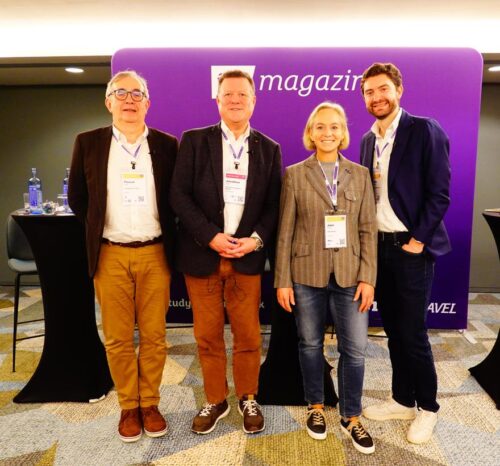
Industry escrow accounts, payment methods, government-backed protection, and the importance of industry collaboration and research were among the points addressed during a special industry discussion on the protection of student fees at the ST Alphe Spain 2026 conference.
Held ahead of the opening of the conference, the discussion was hosted by Matthew Knott, News Editor of StudyTravel Magazine, and the panel featured: Pascal Carré , Manager of Languages & Travel agency and President of Belgian agency association ABELIO ; Jonathan Quinn , Marketing Director of global ELT group Centre of English Studies ; Julia Richter , Managing Director of FDSV , the association of outbound German language tour operators and inbound German language providers; and Oliver Rodriguez , Co-Founder of The Lemon Tree Education agency in Spain.
Following closures on both sides of the industry, the seminar was arranged to discuss protection of fees, particularly for students who have paid but not yet commenced programmes, as well as practical steps that organisations can take.
Vulnerabilities: Pascal outlined some of the vulnerabilities in the current system, explaining that within the EU licensed tour operators are obliged to refund fees to the clients, creating an imbalance against those not required to do so. He also gave an example of Australia’s mandatory Tuition Protection Service (TPS), which only applies to student visa holders and does not cover accommodation.
Jonathan explained while associations are trying to balance the risks, there are gaps in the system. Ireland’s forthcoming TrustEd will provide a protection system for all student fees for approved providers, but some providers will still be able to operate outside of the system and therefore have lower operating costs.
Panellists discussed the reputation risk from closures. Jonathan talked about the damage that overnight closures of long-standing businesses. “It’s an industry-wide reputational problem. We have to be seen to do the best that we can.” Meanwhile, Oliver said that agencies have a load on their shoulders and reputation in the market can be damaged by even just one student experiencing a failure.
Steps to take: Oliver highlighted the importance of agencies conducting very thorough research into their school partners, not just in terms of financial health of the business but also the ownership behind the company, the direction of the business, student numbers and mix, and how well they are adapting to the changes in the market. Julia added that working with partners in the established industry associations adds a further step of assurance.
From an educator perspective, Jonathan highlighted the importance of sharing intelligence in forums such as ALTO Where Leaders Meet , but also visiting agency offices, speaking to staff and getting a feel for if the agent is a good fit.
Greater community through industry groups, as well as within and between industry associations was highlighted to mitigate against situations and make stakeholders more aware of potential difficulties that organisations may be in.
In terms of payment methods, Pascal advised that he sends funds a maximum of fours weeks ahead of the course commencement. He also highlights to clients the protections and guarantees that come from his agency being a licensed tour operator and that these would not apply for students that book directly with a school. Diversification of business was another suggestion from Oliver, ensuring that schools and agencies have a spread of partners and don’t have all their eggs in one basket.
Eren Goker , Board Member of Turkish agency association UED and Felca, joined the discussion at this point and referred to how Germany’s blocked account system for international students works, releasing maintenance funds for students on a monthly basis and said that something similar could be adopted for industry payments.
Mandatory schemes: Panellists also discussed whether it was the responsibility of governments to take a more active approach in protecting the fees of students. Matthew highlighted New Zealand’s student fee protection scheme, which protects payments from all students, covers accommodation and also protects agency commissions as an industry-leading example. Jonathan said that liaison with the industry is integral when governments are enforcing mandatory protection schemes.
Check here: StudyTravel Network